
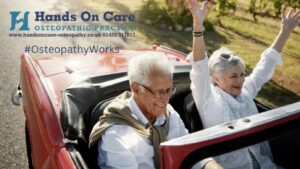
Many people believe that getting older automatically means becoming weaker, stiffer and less able to do the things they enjoy.
Aches and pains become accepted as “just part of getting older”. Walking becomes slower. Activities are gradually given up. Confidence starts to decline.
But is this really an inevitable part of ageing?
As an osteopath, one of the biggest lessons I have learnt over the last 15 years is that the human body is remarkably adaptable. While we cannot stop the ageing process, we can influence how we age.
In many cases, lifestyle has a far greater impact on our future health than the number of birthdays we have celebrated.
Ageing vs Decline
There is no doubt that our bodies change as we get older.
Muscle mass naturally reduces with age. Bones become less dense. Joints may show signs of wear and tear. Recovery can take a little longer than it once did.
However, there is an important difference between ageing and decline.
Ageing is inevitable.
A significant loss of strength, mobility, balance and independence should not simply be accepted without question.
Research consistently shows that regular physical activity, strength training, good nutrition, social connection and quality sleep can have a profound impact on our long-term health and wellbeing.
Many of the changes people assume are caused purely by ageing are actually influenced by inactivity, deconditioning, fear of movement or long-standing pain.
The good news is that many of these factors can be improved.
The Importance of Strength
One of the most exciting developments in healthcare over recent years has been the growing recognition of the importance of strength training for healthy ageing.
Strength training is not about becoming a bodybuilder or spending hours in the gym.
It is about maintaining the strength and resilience needed for everyday life.
Strong muscles help support joints, improve balance and reduce the risk of falls. They make it easier to climb stairs, carry shopping, get out of a chair, enjoy gardening, walk the dog or play with grandchildren.
Strength training has also been shown to benefit:
✔ Bone density and osteoporosis prevention
✔ Balance and fall prevention
✔ Brain health and cognitive function
✔ Energy levels
✔ Confidence and mental wellbeing
✔ Joint health and arthritis management
✔ Long-term independence
For many people, the goal is not simply to live longer, but to remain active and capable throughout those extra years.
Common Barriers to Staying Active
Many people know exercise is important, but pain often becomes a barrier.
You may want to walk more but your knee hurts.
You may want to exercise but your back keeps flaring up.
You may have arthritis and worry that activity will make it worse.
You may have lost confidence following a fall or injury.
This is where osteopathy can often help.
How Can Osteopathy Help?
At Hands on Care Osteopathic Practice in New Milton, we regularly work with people who want to remain active and independent as they get older.
Our role is not simply to treat pain but to help people understand their bodies and improve their ability to move confidently.
Treatment may include:
Improving Joint Mobility
Stiff joints can make movement feel uncomfortable and difficult. Gentle hands-on treatment can help improve mobility and make everyday activities feel easier.
Reducing Pain
Whether the problem is arthritis, back pain, neck pain, hip pain or general stiffness, reducing discomfort can make it easier to stay active.
Supporting Strength and Exercise
Exercise is often one of the most effective treatments available, but it needs to be appropriate for the individual.
We can help guide you towards exercises that are achievable, safe and relevant to your goals.
Improving Balance and Confidence
Poor balance can increase the risk of falls and often leads people to become less active. Advice, exercises and movement strategies can help improve confidence and stability.
Helping You Understand Your Body
One of the most valuable aspects of osteopathic care is education. Understanding why something hurts and what you can do about it often helps reduce fear and allows people to regain confidence in movement.
It’s Never Too Late
One of the most inspiring parts of my job is seeing what people can achieve later in life.
Many of our patients in their 60s, 70s and 80s continue to enjoy walking, swimming, gardening, golf, travelling and spending time with grandchildren.
Some take up new activities they never thought possible.
Others simply regain the confidence to do the things they had gradually stopped doing.
The body continues to adapt throughout life.
It is never too late to become stronger, move more comfortably and improve your quality of life.
The Goal Isn’t to Be Younger
The goal is not to turn back the clock.
The goal is to remain active, resilient and independent for as long as possible.
To be able to enjoy retirement.
To keep doing the activities you love.
To continue making memories with family and friends.
To maintain confidence in your body.
Ageing is inevitable.
But with the right support, education and movement, many aspects of decline are not.
If aches, pains or stiffness are preventing you from living life to the full, osteopathy may be able to help.
Hands on Care Osteopathic Practice – New Milton
We help people from New Milton, Barton on Sea, Highcliffe, Christchurch, Lymington and the surrounding New Forest area stay active, mobile and independent.
To find out whether osteopathy could help you, call us on 01425 517017 or book online today.